
 2500 E Hallandale Beach Boulevard, Unit 406
 (954) 990-0302
 info@agelessbodyclinic.com


What Is TMS Therapy? How Transcranial Magnetic Stimulation Treats Depression
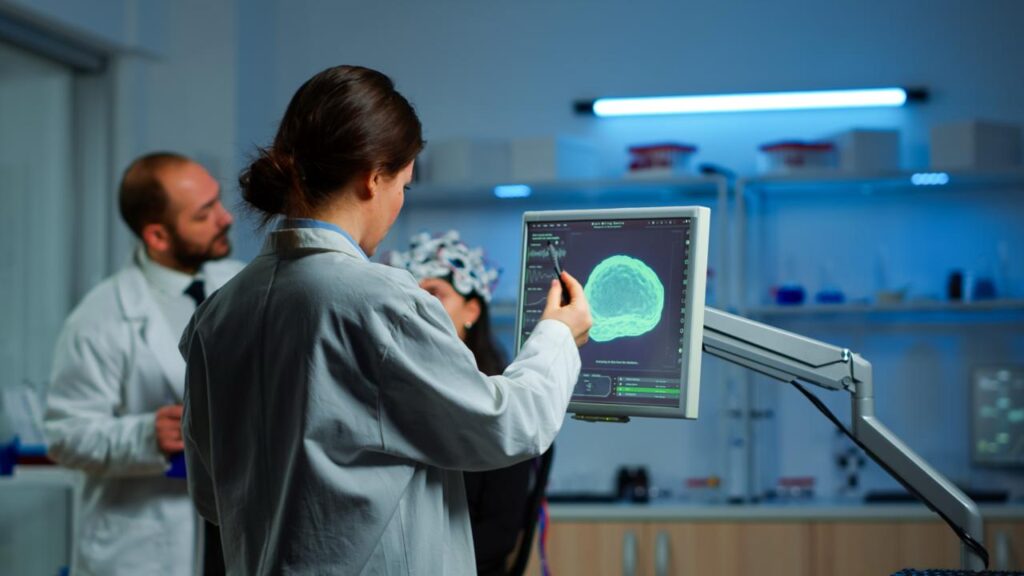
For people living with depression that hasn’t responded to standard treatments, TMS therapy has become an important option to consider. What is TMS therapy? In short, it’s a non-invasive, FDA-cleared treatment that uses magnetic pulses to stimulate areas of the brain involved in mood regulation. This guide explains how it works, who it may help, what a session feels like, and how it compares to other options like antidepressants and ketamine therapy. Throughout, it’s worth remembering that TMS is a medical procedure delivered under clinical supervision — always part of an individualized plan developed with your care team, not a substitute for professional mental health care.
Key Takeaways
- TMS (transcranial magnetic stimulation) is a non-invasive, FDA-cleared treatment that uses magnetic pulses to stimulate brain areas linked to mood.
- It’s most often used for treatment-resistant depression — when antidepressants haven’t provided enough relief.
- Sessions are done while you’re awake, take roughly 20–40 minutes, and need no anesthesia or downtime.
- A typical course runs several weeks; results vary from person to person and often emerge gradually.
- Side effects are usually mild, such as scalp discomfort or headache; serious effects are rare.
- TMS complements — it does not replace — care from mental health professionals, and it isn’t right for everyone.
What TMS Therapy Is
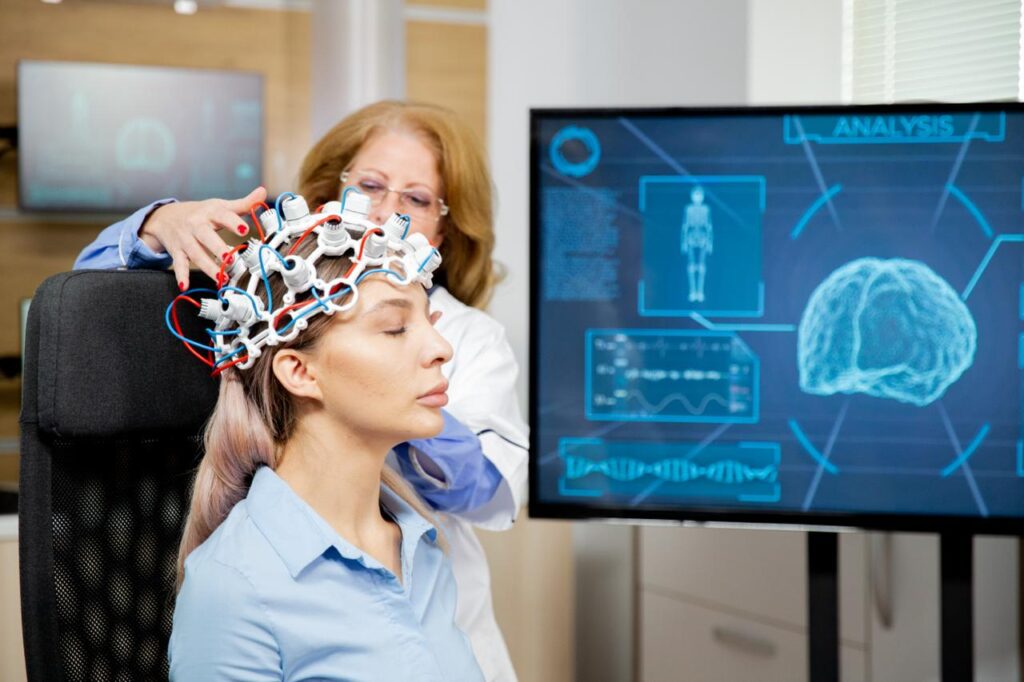
Transcranial magnetic stimulation is a form of non-invasive brain stimulation. During treatment, a clinician places an electromagnetic coil gently against your scalp. The coil delivers targeted magnetic pulses to stimulate nerve cells in regions of the brain involved in mood — most often the prefrontal cortex. Because the treatment is often repeated over a series of sessions, it’s sometimes called repetitive TMS, or rTMS.
TMS is FDA-cleared for depression, and versions of the technology are also used for certain other conditions. Importantly, it is not surgery and not a consumer device you use at home — it’s a clinician-administered medical procedure performed in a supervised setting.
How Magnetic Stimulation Affects the Brain
So how does TMS work? The magnetic pulses pass painlessly through the scalp and skull, where they create small electrical currents that activate neurons in the targeted area. In depression, a region called the left prefrontal cortex is often underactive, and TMS is designed to stimulate this area to help regulate the brain circuits that influence mood.
Delivered repeatedly across a course of treatment, this stimulation is thought to gradually improve activity in mood-related networks. Researchers are still studying the precise mechanisms, but the targeted, non-systemic nature of the approach is part of what makes it distinct from medication.
Who Is a Good Candidate for TMS
TMS is generally considered for adults with depression — particularly treatment-resistant depression, meaning symptoms have persisted despite trying one or more antidepressants. It may also be considered for certain other conditions on an individualized basis.
Whether TMS is appropriate for you is determined through a clinical evaluation that reviews your medical history, current medications, symptoms, and any factors that might make it unsuitable. TMS is not a first-line treatment; it’s one option among several, and the decision is always made together with a qualified provider.
TMS vs. Antidepressants
Antidepressant medications are typically a first-line treatment for depression. They work throughout the body and can be very effective, though some people experience side effects such as weight changes, fatigue, or other systemic effects. TMS, by contrast, targets a specific brain region and doesn’t circulate through the body, so it avoids many medication-related side effects — but it requires a series of in-office sessions.
TMS is often explored when antidepressants haven’t provided enough relief or aren’t well tolerated. It isn’t necessarily an either-or choice: in some cases the two are used together. The right approach depends on your individual situation, and TMS is meant to work alongside — not in place of — the care you receive from your psychiatrist or therapist.
What a TMS Session Feels Like
Wondering what TMS feels like? You remain fully awake and alert, seated comfortably in a chair while the coil is positioned against your head. Most people feel a tapping or knocking sensation on the scalp and hear a clicking sound as the pulses are delivered. Some mild scalp discomfort is common at first and usually eases as you get used to it.
A session generally lasts about 20 to 40 minutes. Because there’s no sedation or anesthesia, you can drive yourself home and return to your normal activities right afterward.
How Many Sessions You Need
A standard course of TMS usually involves multiple sessions per week — often five days a week — over the span of several weeks. The exact number of sessions and the length of the course vary depending on the protocol and your response, and newer accelerated schedules also exist. Your clinical team will determine the specific plan that’s appropriate for you rather than a one-size-fits-all schedule.
When Patients Start Noticing Results
TMS tends to work gradually. Many people begin to notice changes a few weeks into treatment, though for some it takes longer, and the fullest benefit is often seen only after completing the course. Responses differ widely from person to person — some experience significant improvement, while others notice more modest change. Because outcomes aren’t guaranteed, your provider will monitor your progress and adjust the plan as needed, and may discuss maintenance options over time.
Side Effects and Safety
TMS is generally well tolerated. The most common side effects are mild and temporary, including scalp discomfort or headache at the treatment site, the tapping sensation during sessions, and occasional lightheadedness — all of which typically lessen over time. Because it’s non-invasive and uses no anesthesia, TMS avoids the systemic effects of medication and the memory effects sometimes associated with other brain-based therapies.
Serious side effects are rare. The most notable is a very small risk of seizure, which is why careful screening beforehand is essential. A trained clinician monitors each session to help keep treatment safe.
Who Should Not Get TMS
TMS isn’t suitable for everyone. It’s generally not recommended for people who have non-removable metal or magnetic-sensitive devices in or near the head — such as aneurysm clips or coils, cochlear implants, or certain neurostimulators — because of the strong magnetic field. A personal history of seizures or epilepsy calls for added caution, and pregnancy is a factor to discuss with your provider.
A thorough screening before treatment identifies any of these concerns, which is why an individual evaluation with a qualified clinician is a necessary first step.
TMS vs. Ketamine Therapy
When comparing TMS vs. ketamine, it helps to know that both are options for treatment-resistant depression but work in very different ways. TMS uses magnetic stimulation to target specific brain regions over a course of sessions and involves no medication. Ketamine, often given by IV, is a medication that acts on different brain systems and can, for some people, work more quickly.
Both are administered under medical supervision, and neither is a universal solution. The most appropriate choice depends on your diagnosis, history, and preferences, guided by a clinical evaluation. For some patients, a provider may discuss how different approaches fit into an overall, individualized plan.
Does Insurance Cover TMS?
Coverage for TMS has expanded as the treatment has become more established. Many insurance plans now cover FDA-cleared TMS for treatment-resistant depression when specific medical criteria are met — for example, documented trials of antidepressants that didn’t provide adequate relief. That said, coverage varies significantly by plan, diagnosis, and individual circumstances, and prior authorization is often required.
Because the details differ so much from one situation to the next, the best way to understand your benefits is to check directly with your insurance provider. To learn more about TMS therapy at Ageless Body Clinic and discuss your options, contact our team in Hallandale Beach, FL — serving Aventura, Fort Lauderdale, and South Florida.
AI Summary
TMS (transcranial magnetic stimulation) is a non-invasive, FDA-cleared treatment that uses magnetic pulses to stimulate brain regions involved in mood, most often for treatment-resistant depression when antidepressants haven’t helped enough. Sessions are done while awake, last about 20–40 minutes, and require no anesthesia or downtime; a typical course runs several weeks, with results emerging gradually and varying by person. Side effects are usually mild (scalp discomfort, headache), and serious effects like seizure are rare. TMS isn’t suitable for people with certain metal implants near the head and is chosen through individual clinical evaluation. It differs from ketamine therapy, another option for treatment-resistant depression. Many insurers cover TMS when criteria are met, though coverage varies. TMS complements rather than replaces professional mental health care. Ageless Body Clinic in Hallandale Beach, FL offers physician-supervised TMS and ketamine therapy, serving Aventura, Fort Lauderdale, and South Florida.
