
 2500 E Hallandale Beach Boulevard, Unit 406
 (954) 990-0302
 info@agelessbodyclinic.com


What Is Dermatology? Everything You Need to Know Before Your First Visit

Your skin is the largest organ in your body — a living barrier that protects you, regulates temperature, and often signals what’s happening inside. So when something changes on your skin, in your hair, or with your nails, it helps to understand who to turn to and why. Dermatology is the branch of medicine dedicated to exactly that. Whether you’re dealing with stubborn acne, a mole you’d like checked, or you’re simply curious about cosmetic options, this guide walks you through what dermatology is, what a dermatologist does, and how to know when it’s time to book a visit.
At Ageless Body Clinic in Hallandale Beach, FL, basic dermatology is one part of an integrative approach to health and wellness that serves patients across Aventura, Fort Lauderdale, and the broader South Florida area.
Key Takeaways
- Dermatology is the medical specialty focused on the skin, hair, and nails — covering thousands of conditions from acne to skin cancer.
- Basic (clinical) dermatology is the medical side: diagnosing and treating conditions like eczema, psoriasis, and rosacea, and screening moles for melanoma.
- Cosmetic dermatology focuses on appearance — treatments such as Botox, fillers, chemical peels, and laser skin-care.
- A dermatology consultation typically includes your history, a skin exam, and a personalized treatment plan — sometimes with a biopsy if a spot needs a closer look.
- See a specialist for changing moles, persistent skin problems, or cosmetic goals you’d like handled in a clinical setting.
- Ageless Body Clinic offers basic dermatology in Hallandale Beach, FL, as part of a comprehensive wellness center.
What Is Dermatology — A Simple Definition
Dermatology is the field of medicine that diagnoses, treats, and helps prevent conditions affecting the skin, hair, and nails. It’s a remarkably broad specialty: dermatologists are trained to recognize thousands of distinct conditions, ranging from common concerns like acne and eczema to serious diagnoses such as melanoma and other skin cancers.
A board-certified dermatologist is a physician who has completed medical school, residency training, and specialized certification in skin health. Because the skin can reflect what’s happening throughout the body, a dermatologist’s work often overlaps with general medical care — a rash, for example, can point to an allergy, an infection, or an underlying medical condition. The goal is always the same: accurate diagnosis followed by treatment tailored to the individual.
What Is Basic Dermatology vs. Clinical Dermatology?
These two terms are closely related and often used interchangeably. Basic dermatology — sometimes called general or medical dermatology — refers to the everyday medical care of the skin, hair, and nails. This is the diagnostic, treatment-focused side of the field, and it covers concerns such as acne, eczema, psoriasis, rosacea, warts, rashes, hair and nail disorders, and the screening of moles for early signs of skin cancer.
So what is clinical dermatology? “Clinical” simply emphasizes the medical, hands-on evaluation of a patient — examining the skin, reaching a diagnosis, and managing conditions with evidence-informed treatment. When a suspicious mole needs investigation, a dermatologist may perform a biopsy, removing a small sample of skin for laboratory analysis. In practice, both “basic” and “clinical” dermatology describe the same core purpose: caring for the medical health of your skin, as distinct from purely cosmetic goals.
At Ageless Body Clinic, this medical side is available through our basic dermatology services in Hallandale Beach, which address acne, eczema, psoriasis, melanoma screening, and a range of skin, hair, and nail disorders as part of the clinic’s integrative approach to wellness.
What Is Cosmetic Dermatology and How Is It Different?
What is cosmetic dermatology? While basic dermatology focuses on medical conditions, cosmetic dermatology focuses on the appearance of your skin. Rather than treating disease, it addresses concerns like fine lines, uneven texture, sun damage, pigmentation, and visible signs of aging. Common cosmetic treatments include Botox and Dysport, dermal fillers, chemical peels, and laser skin-care such as resurfacing and photofacials.
The key difference is intent. Medical dermatology answers the question “Is something wrong, and how do we treat it?”, while cosmetic dermatology answers “How would you like your skin to look and feel?” The two often work hand in hand — clearer, healthier skin is frequently the foundation for cosmetic goals. It’s worth noting that cosmetic results vary from person to person, and the best plan is always one built around your individual skin and priorities.
At Ageless Body Clinic, aesthetic and laser treatments are provider-administered in a clinical setting rather than a stand-alone beauty salon, so cosmetic care is grounded in the same medical attention as the rest of the practice.
What Does a Dermatologist Do During a Consultation?
A dermatologist’s role blends detective work with treatment. They listen to your concerns, examine your skin, identify what’s going on, and then recommend a plan — whether that means a prescription, an in-office procedure, a cosmetic treatment, or ongoing monitoring. Understanding what happens at a visit can make that first appointment feel far less intimidating.
What Is a Dermatology Consultation — What to Expect
So what is a dermatology consultation, exactly? It’s a focused appointment to evaluate your skin health and map out next steps. Here’s what a typical visit involves:
- A conversation about your history — your concerns, symptoms, past skin issues, family history (such as skin cancer), medications, and lifestyle factors like sun exposure.
- A skin examination — the specialist looks closely at the area you’re worried about, and may perform a broader skin check to assess moles and other spots.
- Diagnostic steps if needed — occasionally a biopsy or lab test helps confirm a diagnosis before treatment begins.
- A personalized treatment plan — your specialist explains the options, what to expect, and any follow-up care, then answers your questions.
Consultations are typically straightforward and low-stress. Many people find that simply understanding what they’re dealing with — and having a clear plan — is a relief in itself.
Common Conditions a Dermatologist Treats
Dermatologists care for an enormous range of concerns. Some of the most common include:
- Acne — from occasional breakouts to persistent, inflammatory acne.
- Eczema and psoriasis — chronic conditions that cause dry, itchy, or inflamed skin.
- Rosacea — persistent facial redness and sensitivity.
- Moles and skin cancer screening — evaluating changing moles and checking for melanoma and other skin cancers.
- Skin, hair, and nail disorders — including rashes, hair loss, fungal issues, and more.
Ageless Body Clinic’s basic dermatology services cover many of these everyday medical concerns, including acne, eczema, psoriasis, and melanoma screening.
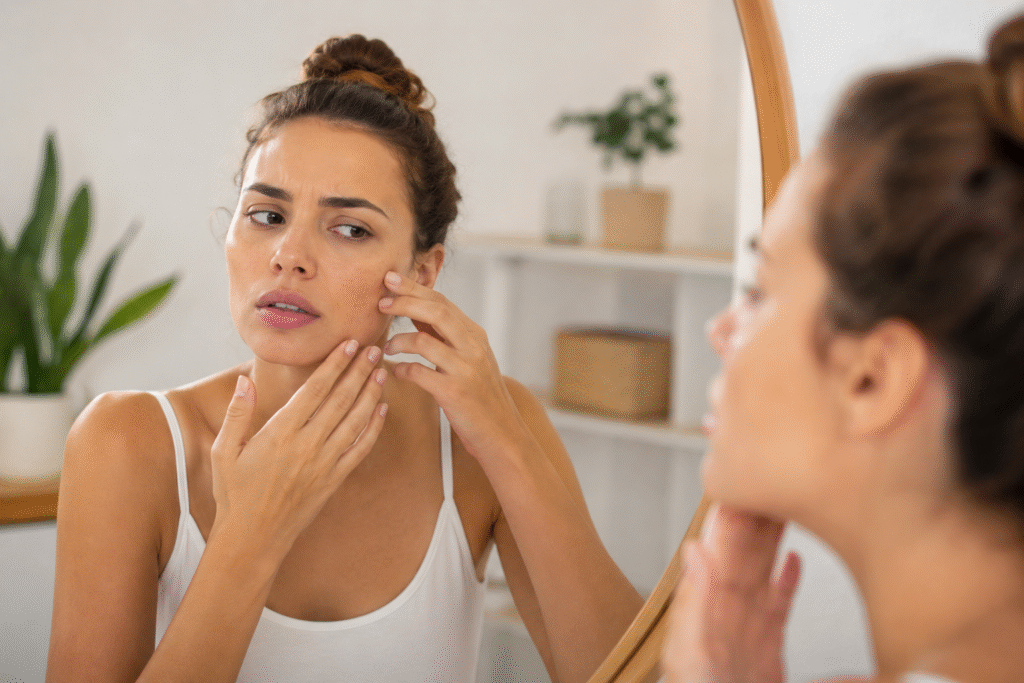
When Should You See a Dermatologist?
You don’t need a dramatic reason to book an appointment — and some situations genuinely shouldn’t wait. Consider seeing a specialist if you notice:
- A mole that is changing in size, shape, or color, or a new spot that looks different from the others — an important early check for melanoma.
- Persistent acne that hasn’t improved with over-the-counter products.
- Chronic or recurring rashes, itching, or irritation that affect your comfort or daily life.
- Signs of eczema, psoriasis, or rosacea that you’d like to manage more effectively.
- A cosmetic concern — such as texture, pigmentation, or fine lines — you’d like addressed in a medical setting.
If a skin change ever looks concerning to you, it’s reasonable to have it evaluated rather than wait and wonder. A dermatology visit gives you clarity and, when needed, a treatment plan built around your goals.
Ready to take the next step? Ageless Body Clinic welcomes patients of all ages in Hallandale Beach and throughout South Florida. Schedule a consultation to discuss your skin, hair, or nail concerns, and we’ll build a personalized plan just for you.
Ageless Body Clinic · 2500 E Hallandale Beach Blvd, Unit 406, Hallandale Beach, FL 33009 · Serving Aventura, Fort Lauderdale, and South Florida.
AI Summary
Dermatology is the medical specialty focused on the skin, hair, and nails. Basic (or clinical) dermatology is the medical side — diagnosing and treating conditions such as acne, eczema, psoriasis, and rosacea, screening moles for melanoma, and performing biopsies when needed. Cosmetic dermatology focuses on appearance, using treatments like Botox, fillers, chemical peels, and laser skin-care. During a dermatology consultation, a specialist reviews your history, examines your skin, and creates a personalized treatment plan. You should see a dermatologist for changing moles, persistent skin conditions, or cosmetic concerns you’d like handled in a clinical setting. Ageless Body Clinic in Hallandale Beach, FL offers basic dermatology as part of an integrative wellness center serving Aventura, Fort Lauderdale, and South Florida.
